
Durga Puja Explained (With Less Religion, More Revelry)
With Durga Puja just wrapped up, I thought I'd answer the most asked question to me: "So, what is Durga Puja exactly?" "How is it different from Navaratri?" "You eat meat at Durga Puja?!" If you've wondered any of these questions, hold on to your hats, I’m about to explain it all.
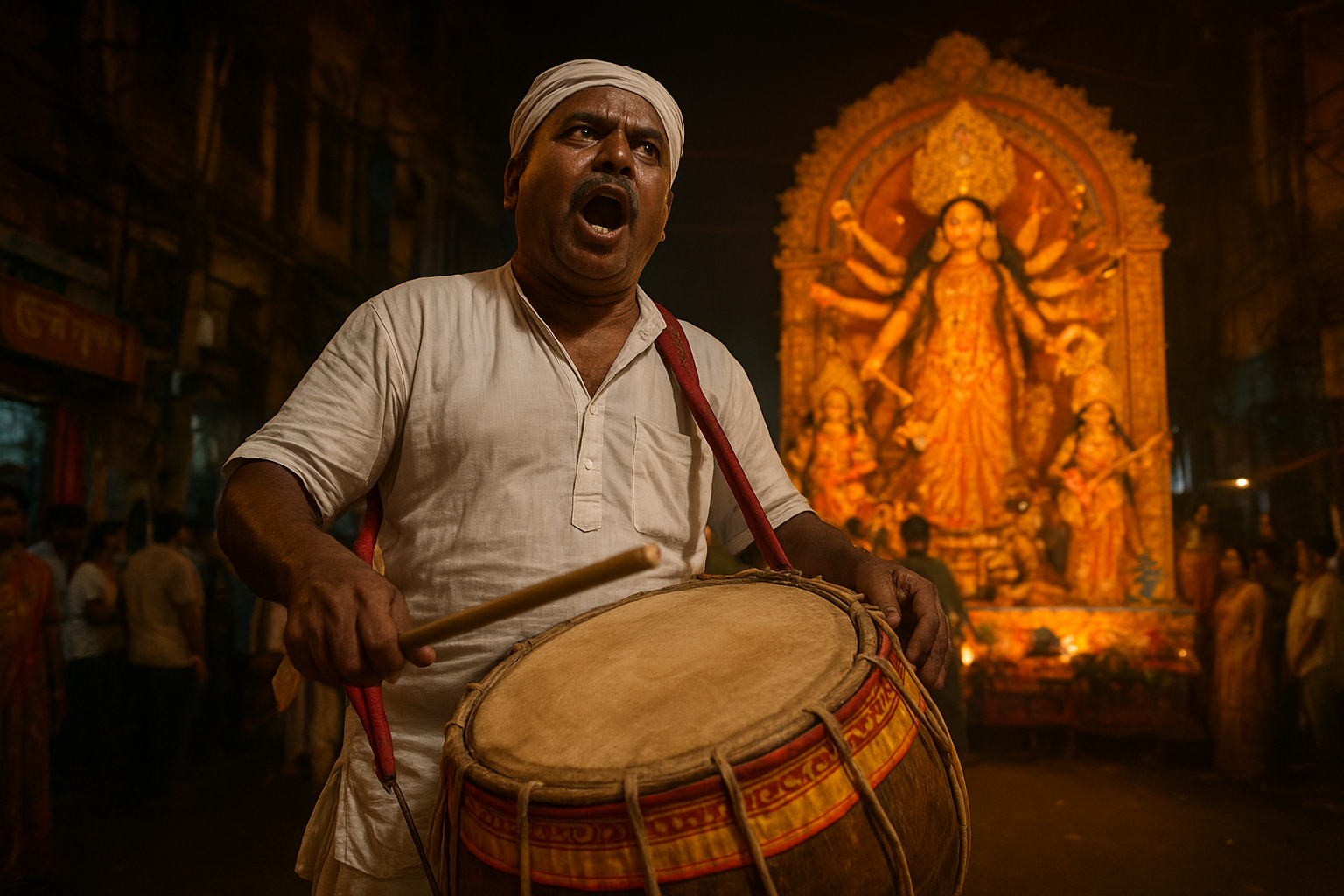
Think of Durga Puja as India’s answer to a music festival — only swap the DJs for dhak drummers*, and the headliner is a ten-armed goddess who slays demons and wins hearts. Every October (approximately), the streets of Kolkata turn into a non-stop celebration of art, food, and faith — part spiritual, part social, and entirely electric. And while the festival honours the victory of good over evil and the strength and resilience of the feminine power, let’s be honest — it’s also about the fashion, the lights, and the glorious chaos that no one really wants to end.
But what exactly is Durga Puja — and how did it become the wild, joyful spectacle it is today?
Durga means the goddess, and Puja means worship — so, quite literally, it’s “the worship of Goddess Durga.”
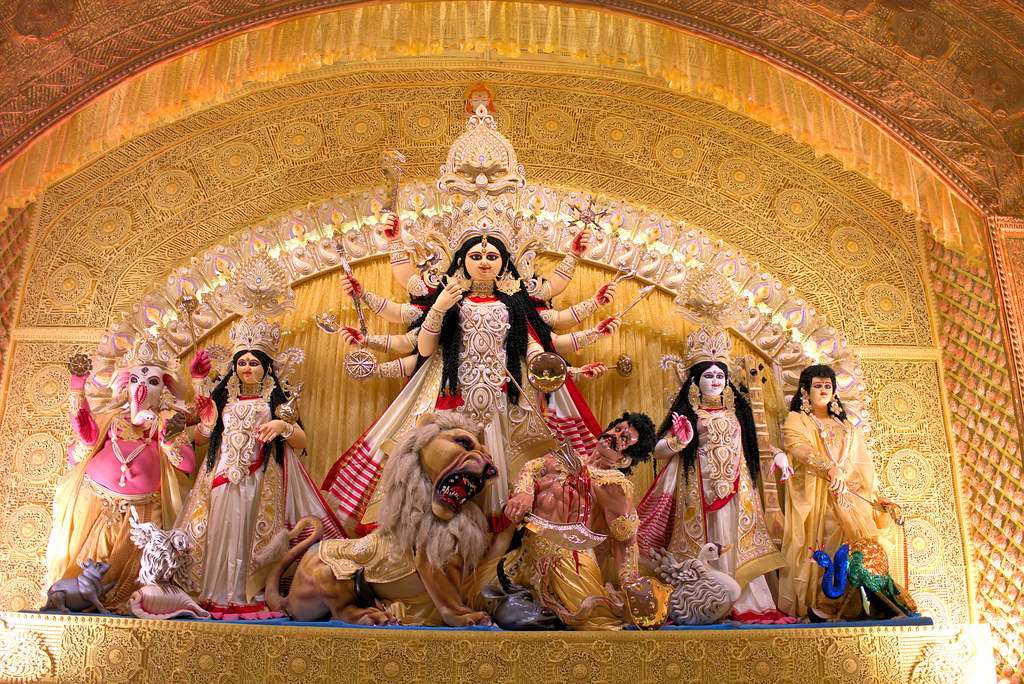
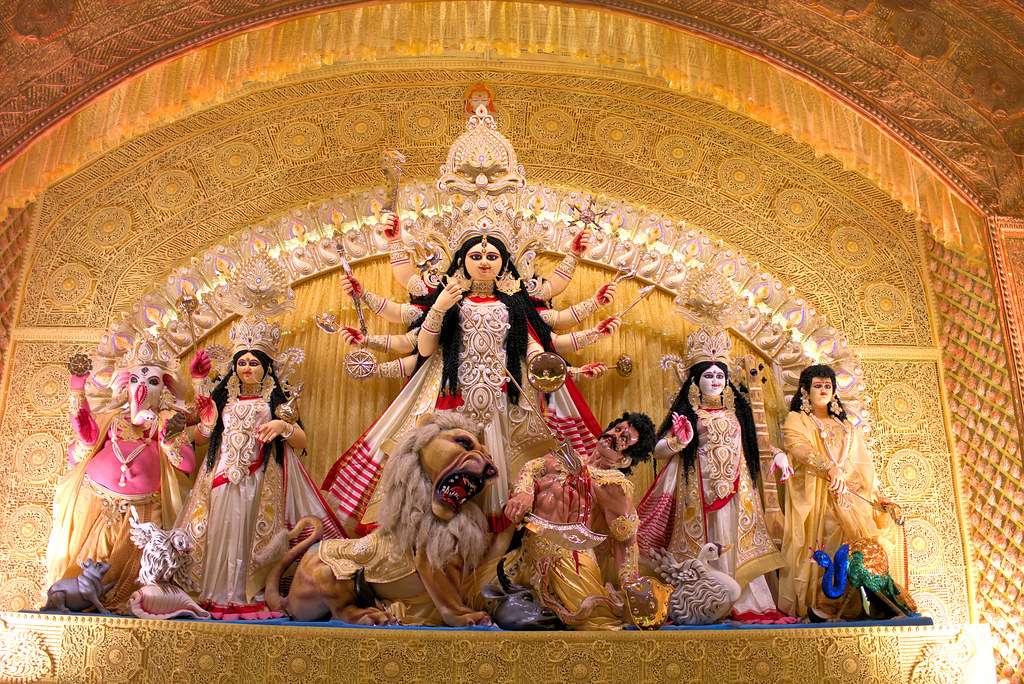
Legend has it that once upon a time, a deadly demon named Mahishasura was wreaking havoc on earth. He could transform into a buffalo at will, and not even the gods — Brahma, Vishnu, and Shiva — could stop him. In desperation, they combined their powers, and from their divine energy emerged a warrior goddess with ten arms, each holding a weapon, riding a lion. She was fierce, radiant, and unstoppable — Goddess Durga.
Mahishasura laughed at the idea of being defeated by a woman. "A woman to kill me?!" "The gods have no power anymore! They sent a woman to stop me!" he said as he laughed! But Durga wasn’t amused. With calm precision, she fought him, trapped him in his buffalo form, and struck him down with her trident. The heavens erupted in joy — good had triumphed over evil.
And so began the story of Durga’s victory, and her annual visit to Earth with her four children — Ganesha, Lakshmi, Saraswati, and Kartikeya — which we now celebrate as Durga Puja.
What Actually Happens During Durga Puja?
Now, of course the goddess had saved all the people on earth! So, how could we possibly the grandest party known to man kind - and behold, that's how Durga Puja came to be the celebration it is today! All the streets are lit, there are stalls selling the most delicious street food, different venues do the puja in their own ways but is almost always accompanied by the beats from a dhak (drum). Since, in Hinduism idols are worshipped, each corner of Kolkata has their own altar - what is known as pandal with their own design of the idols.
Although Durga puja usually begins Mahalaya marking the descent of the goddess and her 4 children to Earth. The main five days of Durga puja are known as:
- Shoshti aka; The arrival - the goddess is formally welcomed. The pandals open, the idols are unveiled and the festive energy begins to ripple through the city. It’s all about anticipation and excitement — the calm before the joyful storm.
- Saptami aka; the awakening - the ritual of Nabapatrika snaan (the bathing of nine plants symbolizing Durga) is performed, signifying the goddess’s arrival in her full form. The first pushpanjali (flower offering) happens, and the streets come alive with people in new clothes, music, and food stalls.
- Astami aka; the power - The fierce yet benevolent side of the goddess is celebrated. The Sandhi Puja (the moment between Ashtami and Navami) marks her victory over Mahishasura. Devotees offer prayers, and women perform dhunuchi naach — a smoky, rhythmic dance with incense burners.
- Navami aka; the celebration - is about joy, gratitude, and community. After the intense devotion of Ashtami, the day overflows with feasting, cultural performances, and final offerings. It’s when pandals are at their brightest, and everyone soaks in the magic before it ends.
The Navami puja finishes with a sacrifice of some form (no, no. We don't sacrifice animals, humans, clothes or anything - usually a vegetable is chopped in front of the Goddess and used to cook for the dinner). It's after Navami puja that we (Bengalis) tend to eat meat! Why? Because from here on, it's more of a celebration, before this day it was more spiritual and meat is said to consume more energy to digest and leaving you less focused on worshipping.
- Dashami; aka the farewell - the mood turns emotional. This is the last day of Durga Puja, and married woman all come together wearing the traditional white saree with red border and bidding farewell to the Goddess with the Sindoor Khela ritual, where married women smear each other with vermilion; expressing their gratitude to the goddess for all that she has done and asks her to come again next year. The idols are then taken for immersion (visarjan), symbolizing Durga’s return to her celestial abode. It ends with smiles, tears, and a hopeful “Asche Bochor Abar Hobe” — We’ll celebrate again next year.
During these five days, people of Kolkata dress in their finest outfits and go pandal hopping — think of it as a spiritual pub crawl. Businesses set up stalls, restaurants stay open nearly 24/7, and the city runs on joy, music, and mishti (sweets).
The Modern Durga Puja: Art, Community, and Instagram Fever
Over the years, Durga Puja has evolved into a full-blown cultural phenomenon. Today’s pandals feature art installations, light shows, and even eco-friendly idols. There’s a friendly competition across the city to see which neighborhood has the most creative setup.
Thanks to social media, the artistry of Puja has reached the world’s fingertips — every chandelier, idol, and dhunuchi dance becomes a snapshot of shared creativity.
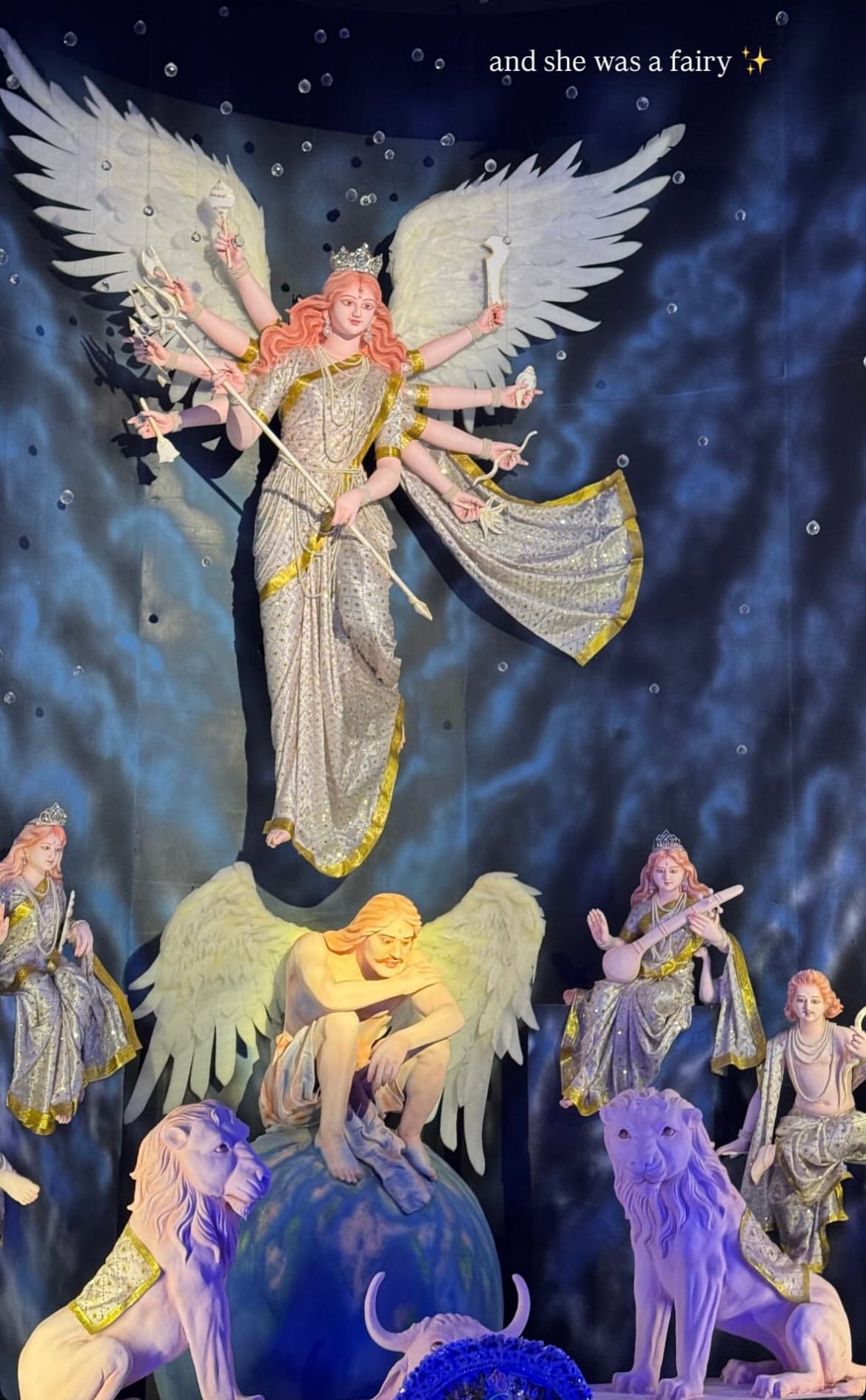
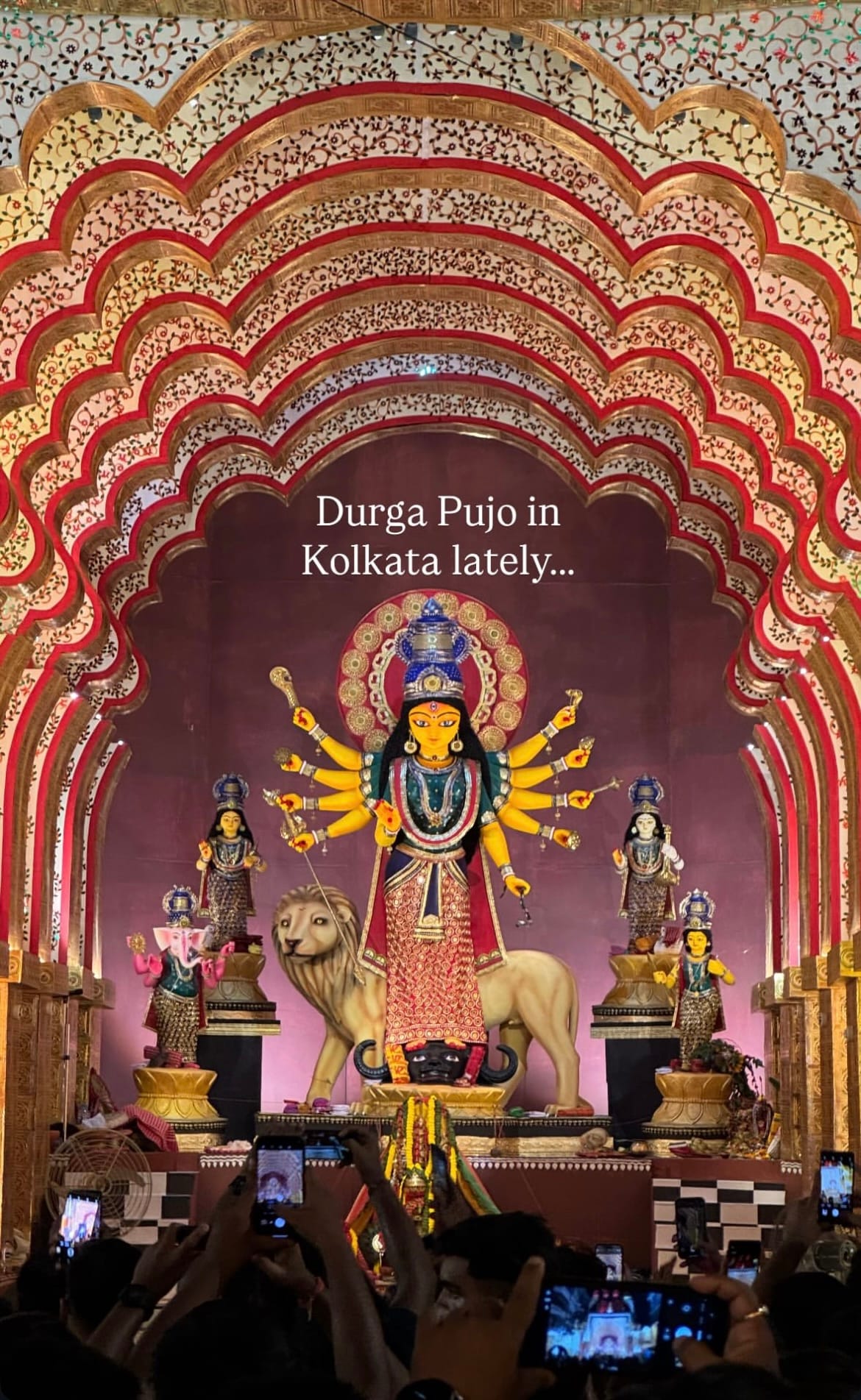
And honestly, with such stunning designs, who can resist a few selfies under those glittering lights?
Why Durga Puja Is More Than a Festival
Durga Puja isn't just about prayers and religion. Beyond the lights and idols, it’s a reminder of strength, resilience, creativity and the feminine power that inspires and uplifts the hearts of many - it’s a heartbeat that unites millions. It’s where artistry meets emotion, where neighborhoods turn into families, and where nostalgia lingers in every beat of the dhak. For those 5 days, we are all one. We are celebrating ourselves and each other. Each year, as the goddess arrives and departs, she leaves behind something deeper than faith: a sense of belonging, joy, and renewal that carries on long after the drums fall silent. Durga Puja isn’t just about worship — it’s about finding strength, beauty, and a reason to dance with your city until sunrise.
While Durga Puja fills Kolkata with color and chaos, other parts of India celebrate the same spirit through Navaratri — nine nights of dance, devotion, and energy that echo the same message of light triumphing over darkness.
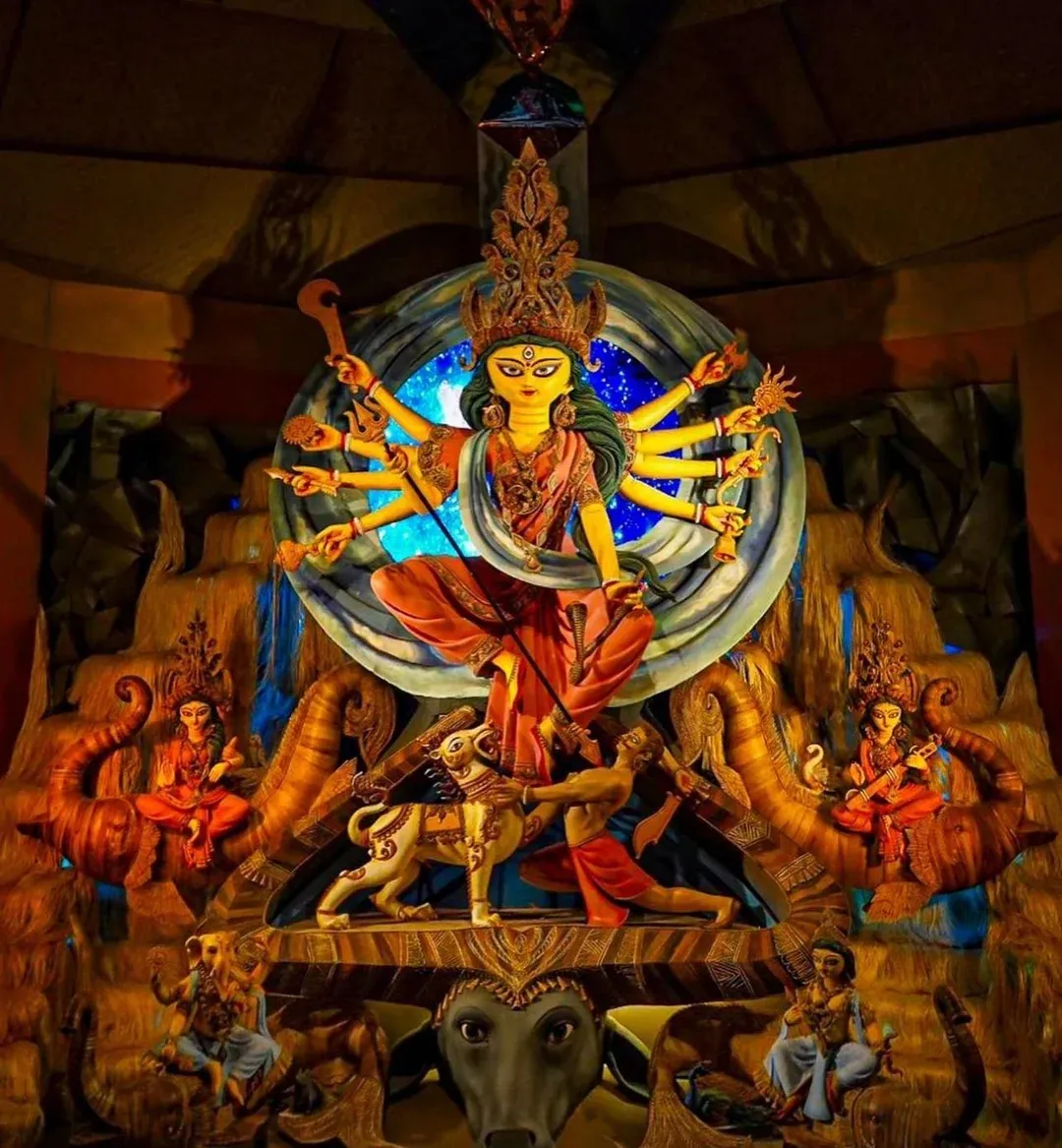
And just like that, another Puja season fades — the idols immersed, the streets quieter, but our hearts still full. Because Durga Puja never truly ends; it simply takes on new forms — in our memories, our music, and our moments of joy. Whether you’ve lived it or only heard of it, one thing’s certain: once you’ve felt the pulse of Puja, you’ll never forget it.